



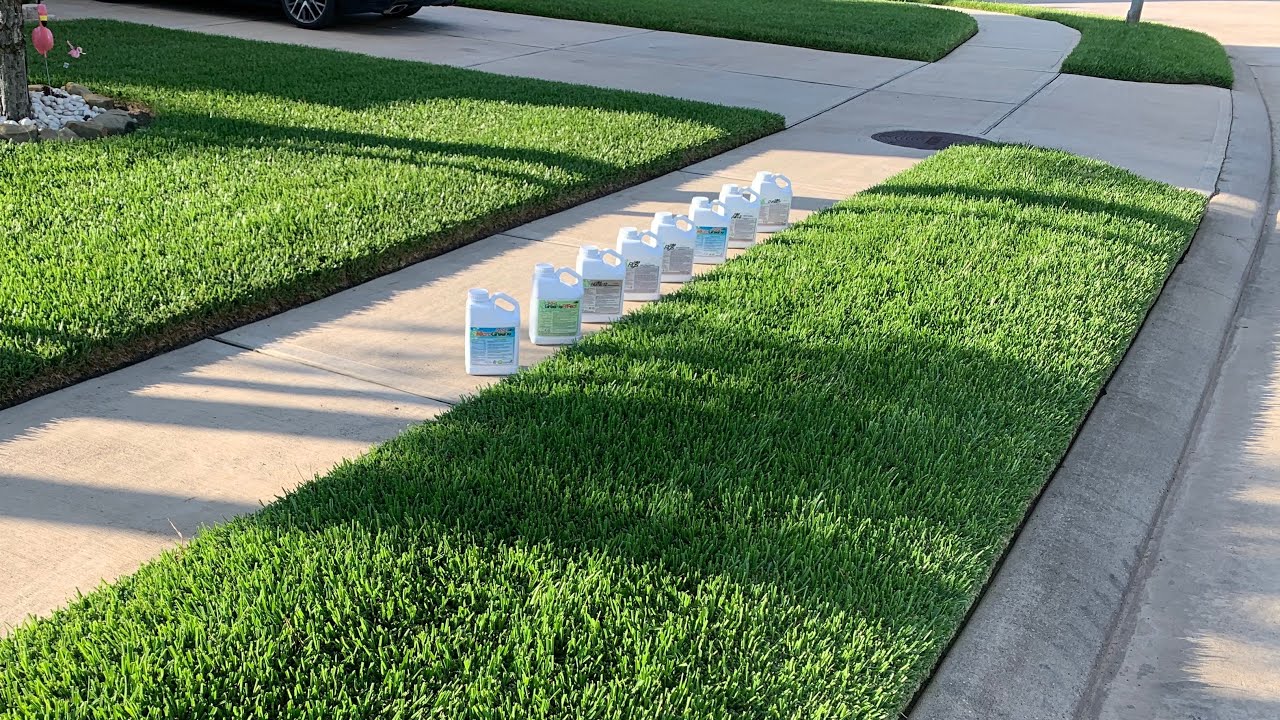
How to Keep Your St. Augustine Grass Green in Dallas-Fort Worth
Did your lawn look incredible after all of the rain in May and June? If you've noticed the color beginning to fade as summer temperatures climb, you're not alone. The difference isn't usually the grass—it's the watering schedule.
In North Texas, a healthy lawn needs consistency. Think of your lawn like a bucket of soil. You never want the upper portion of that bucket to become completely dry. Keeping the root zone consistently moist is one of the biggest secrets to maintaining a lush, green lawn throughout the summer. It costs you more money to water, but it’s a requirement.
- Keep the Soil Moist
During extended periods of heat, St. Augustine (any grass type in DFW) performs best when it never completely dries out. Large lawns in full sun or shade (most important) often need more frequent irrigation. A typical sprinkler zone may need around 10 minutes or more per cycle, but every sprinkler system is different. Mine run 10 minutes twice per day, every other day & 10 minutes in each zone once every other day.
The goal isn't simply watering—it's maintaining consistent moisture without allowing the lawn to experience drought stress.
- Shade Grass Needs Moisture Too
One of the biggest lawn myths is that shaded grass needs much less water.
In Dallas-Fort Worth, the opposite is often true.
Because shaded areas receive less sunlight, once St. Augustine dries out and begins to thin, there often isn't enough light available for it to recover quickly. Even though you have dappled light, the heat dries the ground out more frequently than you think. That's why so many homeowners believe their trees are killing the grass. Keep your shaded grass consistently moist and that grass will grow think and lush. I didn't say a swamp however, so use common sense.
In reality, St. Augustine is one of the best grasses available for shaded landscapes. Most failures occur because the grass became too dry at some point. Once it dies back, the limited sunlight makes recovery much slower.
If you notice thin areas beneath trees but the surrounding grass is healthy, keep those areas consistently moist. Many thin spots will gradually fill back in naturally without replacing sod. But if you have huge patches, new sod may be needed for a faster solution.
- Nitrogen Creates Green Grass
If your lawn is healthy but lacks color, nitrogen is usually the answer.
A monthly fertilizer program can dramatically improve color and overall vigor.
I've had excellent results with Double Dark from Yard Mastery for rapid green-up. If you prefer a natural approach, Derby Green also from Yard Mastery is another outstanding option that produces excellent color while using natural ingredients. But before you go putting granular fertilizer down there are instructions to follow for spreading it, the spreader setting and the best spreader to use.
Next week I'll share my favorite liquid fertilizer and root stimulator program that helps produce deeper roots, stronger growth, and a thicker, healthier lawn throughout the growing season. I’ll also share the only tool you need to spray it, how easy it is and all of the products for the most part are error free and provide amazing results.
Use the "Cycle and Soak" Feature on Your Sprinkler System
One of the best lawn watering secrets that many North Texas homeowners don't know about is the Cycle and Soak feature found on many modern sprinkler controllers. If you've ever noticed water running down the street, pooling on sidewalks, or quickly running off sloped or compacted soil, Cycle and Soak can make a tremendous difference. Instead of watering one zone for 10 straight minutes, the controller breaks that time into shorter watering cycles with a rest period in between. For example, each of my zones is set to water for a total of 10 minutes by spraying for 2 minutes, then resting for about 5 minutes while another zone runs, before returning to finish the remaining cycles. This allows water to soak into the soil instead of running off the surface, resulting in deeper moisture, healthier roots, and more efficient irrigation. Even on relatively flat lawns in Texas, this feature can help maintain more consistent soil moisture during the summer. Setting up Cycle and Soak can sometimes be a little confusing because every sprinkler controller is different, so check your owner's manual or call the manufacturer's customer support. I called mine, and they walked me through the setup in about 10 minutes. Don't be surprised if a neighbor tells you your sprinkler system is "acting funny"—it's actually one of the best irrigation hacks for reducing runoff, conserving water, and keeping your lawn greener during the hottest months of the year. And if your just dead set on watering less because of the cost, cycle and soak will save you money too.
Coming Soon
Future homeowner guides will include:
- Liquid fertilizer and root stimulator recommendations - Superthrive, Dynagro
- Fertilizers that improve your lawn without damaging it
- How to water orchids properly – Get 14 weeks out of orchids
- Easy watering tips for indoor tropical plants – Easily grow tropical house plants that look good for 5-10 years, watering them 6-8 times per year. (my speciality)
- How to care for bromeliads – Get 14-24 weeks out of a bromeliad watering it monthly
- The best shrubs and grasses for shaded landscapes
- Indoor / outdoor tools to make your life easier
About the Author
Most people know me as a Realtor serving Colleyville, Southlake, Keller, Bedford, Grapevine, Westlake, and surrounding Dallas-Fort Worth communities. Before real estate, I spent more than 25 years in the interior plant industry, where I designed and sold decorative container gardens, tropical plant installations, and large specimen plants for luxury residences, corporate offices, public institutions, and other high-end commercial properties. Many times working side by side with interior designers, building owners or project managers managing high-end multi-million dollar renovation or new construction projects. As an Operations Manager and lead sales representative, I had the privilege of working on projects for well-known business leaders, public figures, and clients who expected exceptional quality.
If you have general questions about lawn care, indoor plants, or are considering buying or selling a home, I'd be happy to help. Feel free to give me a call anytime.
Related Reading
Planning to install new sod, shrubs, or trees? Before you start, be sure to read my guide on the best time to plant in Dallas-Fort Worth. You'll learn why October is often the ideal time to plant in North Texas, how our mild winters help establish stronger root systems, and the simple fertilizer routine I use to keep new lawns healthy.
→ Read: The Best Time to Plant Sod, Shrubs, and Trees in Dallas-Fort Worth (Hint: It's Not Spring)

Leave a Reply